
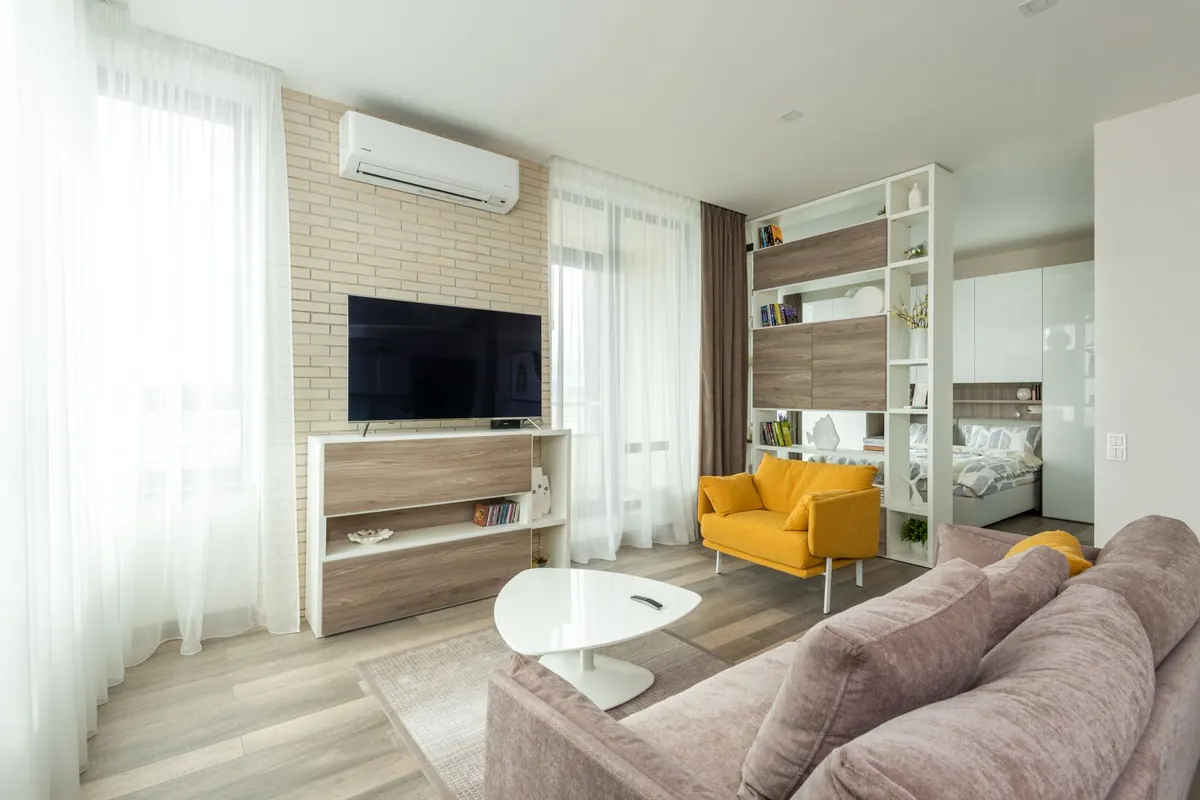
Mini Split Indoor Units That Don't Look Like Mini Splits
Let's address the elephant on the wall: many people hesitate to install a mini split because of the big white rectangle that would sit prominently in their living room. The standard wall-mount unit is functional and effective, but it's not exactly a design statement. Some homeowners, and plenty of interior designers, find it downright unattractive.
Here's the good news: the mini split industry has moved well beyond the standard wall-mount. Today, you can get ceiling cassettes that disappear into the ceiling, concealed duct units that are completely invisible, floor consoles that look like radiator covers, and even designer wall units that actually complement modern interiors.
Option 1: Ceiling Cassettes, The Invisible Choice
Ceiling cassettes are the gold standard for aesthetically discreet mini splits. The unit body installs recessed into the ceiling (inside a drop ceiling or between joists), and only a flat decorative grille is visible from below.
How They Work
- The indoor unit sits above the ceiling line, hidden from view
- A decorative panel (typically 24" × 24" or 33" × 33") mounts flush with the ceiling
- Air distributes in four directions simultaneously for even room coverage
- Return air enters through the center of the panel
Why Choose a Ceiling Cassette
- Near-invisible presence: Looks like a ceiling vent, not an air conditioner
- 360° air distribution: More even comfort than wall units that blow in one direction
- No wall space used: Perfect for rooms where every wall is occupied by windows, art, or furniture
- Commercial aesthetic: Blends seamlessly in offices, restaurants, and retail spaces
What You Need
- Ceiling space: Minimum 10–14 inches above the ceiling line for the unit body
- Access panel or removable ceiling tile for maintenance
- Drop ceiling, suspended ceiling, or sufficient joist space in residential applications
- Professional installation: More complex than a wall mount
Ideal For
- Modern homes with drywall ceilings (requires a custom opening)
- Commercial spaces with drop ceilings
- Living rooms and master bedrooms where wall aesthetics matter
- Open floor plans where a single unit needs to cover a wide area
Cost Premium
Ceiling cassettes cost 20–40% more than equivalent wall-mount units due to the unit itself and more complex installation. A 12,000 BTU ceiling cassette system runs $2,500–$5,000 installed compared to $1,800–$3,500 for a wall mount.
Option 2: Concealed Duct (Ducted Mini Splits), Truly Invisible
If you want zero visible indoor equipment, a concealed duct mini split is your answer. The indoor unit hides entirely in a ceiling cavity, attic, closet, or soffit, and delivers air through traditional-looking supply and return grilles.
How They Work
- A slim indoor unit (typically 8–12 inches tall) installs above the ceiling, in an attic, or in a closet
- Short duct runs (usually 10–20 feet) connect to standard supply registers in the ceiling or wall
- Return air enters through a separate grille
- From inside the room, you see nothing but standard HVAC vents: no one would know it's a mini split
Why Choose Concealed Duct
- Completely invisible: No equipment visible in the room at all
- Familiar appearance: Supply grilles look identical to central air vents
- Flexible placement: Air can be directed exactly where you want it
- Multi-room coverage: A single concealed duct unit can serve 1–3 adjacent rooms via duct branches
- Perfect for renovations: Add cooling to rooms without any visible changes
What You Need
- Accessible cavity: Attic, ceiling plenum, or closet space for the unit
- Short duct runs: Concealed duct mini splits work best with runs under 20 feet
- Standard grilles/registers: Available at any hardware store
- Condensate drain routing: Must be planned carefully since the unit is hidden
Ideal For
- High-end homes where visible HVAC equipment is unacceptable
- Historic renovations where wall-mounted equipment would be out of character
- Bedrooms where you don't want to see or hear equipment
- Finished basements with low ceilings (slim units fit in tight spaces)
Cost Premium
Concealed duct units cost 30–50% more than wall mounts when you include the ductwork, registers, and more complex installation. A single-zone system runs $3,000–$6,000 installed.
Option 3: Floor Console, Low-Profile and Accessible
Floor consoles mount low on the wall (or stand on the floor), resembling a baseboard radiator or a modern space heater more than a traditional mini split.
How They Work
- The unit sits near floor level, typically 2–3 feet tall and 6–8 inches deep
- Air blows upward, creating a curtain of conditioned air that rises and circulates
- Most models can also blow air outward from the bottom for heating mode (warm air at foot level)
Why Choose a Floor Console
- Below-window installation: Fits perfectly under windows where wall mounts can't go
- Easy maintenance: Filters and coils are accessible at floor level
- Better heating performance: Warm air delivered at floor level rises naturally, providing more even heat
- Lower visual profile: Doesn't dominate the room like a high-wall unit
Ideal For
- Rooms with low ceilings or sloped walls (attics, dormers, A-frames)
- Elderly or mobility-impaired users: Easier to access than wall-mount filters
- Sunrooms and additions with lots of windows and limited wall space
- Replacing baseboard heaters: Similar look, vastly better performance
Cost
Floor consoles are similarly priced to wall mounts: $1,800–$4,000 installed for a single-zone system.
Option 4: Designer Wall Mounts, Beauty Meets Function
The standard white wall-mount unit is getting a design makeover. Several manufacturers now offer premium wall units with thoughtful aesthetics:
What's Available
- Mitsubishi Designer Series (MSZ-EF): Available in matte black, silver, and white with a flat, modern profile
- LG Artcool Gallery: Features a customizable front panel where you can insert artwork or photos
- Daikin Stylish (FTXA): Ultra-slim profile (less than 7 inches deep) in silver, white, or blackwood finishes
- Samsung Wind-Free: Disperses air through 23,000 micro-holes instead of a visible louver, eliminating the "cold draft" feeling
Why Choose a Designer Wall Mount
- Intentional design rather than an appliance-on-the-wall look
- Color options that complement your interior palette
- Slimmer profiles that protrude less from the wall
- Unique features like artwork panels or micro-perforated air distribution
Cost Premium
Designer wall units cost 10–30% more than standard white units. The premium is usually $200–$600 per unit, a modest price for a significantly better look.
Comparing the Options
| Feature | Ceiling Cassette | Concealed Duct | Floor Console | Designer Wall |
|---|---|---|---|---|
| Visibility | Minimal (grille only) | Zero | Low profile | Moderate (styled) |
| Installation complexity | High | Highest | Moderate | Easy |
| Cost premium | 20–40% | 30–50% | 0–10% | 10–30% |
| Ceiling space needed | Yes (10–14") | Yes (8–12") | No | No |
| Best for | Open floor plans | High-end/historic | Under windows | Modern interiors |
| Maintenance access | Moderate | Harder | Easy | Easy |
Making the Right Choice
Consider Your Space
- Open concept living room: Ceiling cassette or concealed duct
- Master bedroom: Concealed duct (silence + invisibility) or quiet designer wall mount
- Kitchen/dining: Ceiling cassette (keeps walls free)
- Historic home: Concealed duct (preserves character)
- Sunroom with windows: Floor console
- Modern loft: Designer wall mount in black or silver
Consider Your Budget
If aesthetics are the priority but budget is tight, a designer wall mount gives you the biggest visual improvement for the smallest cost premium. If budget is no concern, concealed duct provides true invisibility.
Consider Maintenance
The more hidden the unit, the harder it is to maintain. Ceiling cassettes and concealed duct units require planned access points and sometimes a ladder for filter changes. Floor consoles and wall mounts are the easiest to maintain.
The Bottom Line
The "ugly white box on the wall" objection is no longer valid. Modern mini splits come in configurations that can be nearly invisible, architecturally integrated, or genuinely attractive. Whether you choose a ceiling cassette that disappears into the ceiling, a concealed duct system that's completely hidden, or a designer wall unit that's actually a style statement, there's a mini split option that respects your interior design.
The technology is the same regardless of form factor: you get the same efficiency, zone control, and comfort. The only question is how much you're willing to invest in making the delivery invisible.