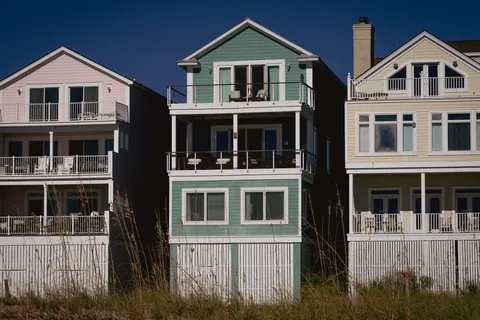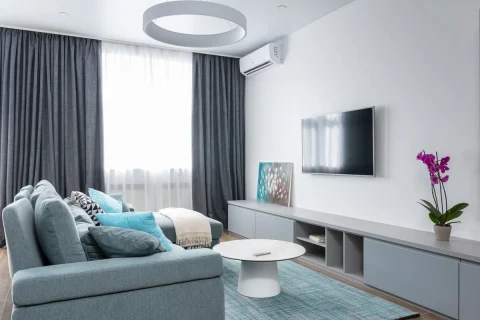

Northern California's coastal communities live with a climate phenomenon that creates HVAC challenges unlike anywhere else in the country: the persistent marine layer that rolls in from the Pacific, blanketing coastal neighborhoods from San Francisco to Marin, the Peninsula, and parts of the East Bay with cool, moisture-saturated air for weeks or months at a time. Understanding how to manage fog and marine layer humidity in NorCal coastal homes, and how mini splits and other HVAC systems handle these conditions, is essential for achieving year-round comfort in one of California's most beautiful but climatically demanding environments.
The marine layer is not merely a comfort nuisance. Persistent 80–95% relative humidity inside homes, common during extended marine intrusion periods, damages wood floors, promotes mold growth, creates condensation on windows and walls, and causes significant long-term structural degradation if not properly managed. The right HVAC approach for NorCal's fog belt addresses humidity management as a primary function, not an afterthought.
Understanding NorCal's Marine Layer: The Climate Context
How the Marine Layer Forms
The Pacific marine layer forms when the cold California Current (water temperature 50–58°F along the NorCal coast) cools the lowest layer of the marine boundary layer to its dew point, forming a persistent stratus cloud deck. The typical marine layer in the Bay Area extends from sea level to 1,000–2,500 feet elevation, intrudes inland through the Golden Gate corridor and other gap passages, and burns off by mid-morning in summer, but in May, June, and early July (the infamous "June Gloom" phenomenon), marine layer intrusion can extend through midday or persist all day.
Marine layer periods deliver:
- Outdoor relative humidity of 80–100% during fog periods
- Temperatures of 50–62°F at the coast; 56–70°F in inner Bay areas
- Wind from the northwest or west carrying marine moisture inland
- No meaningful temperature differential between day and night during heavy marine intrusion
Areas Most Affected
Marine layer intensity varies dramatically by location:
- Most intense (persistent fog): Ocean Beach, Outer Sunset, Outer Richmond (SF); Pacifica; Half Moon Bay; coastal Marin (Muir Beach, Stinson Beach); Daly City; western Santa Cruz
- Moderate fog exposure: Inner Sunset, Inner Richmond (SF); Tiburon, Sausalito; western San Mateo; Los Altos Hills; Woodside; Portola Valley
- Transitional (fog breaks): Berkeley hills; Orinda; Walnut Creek; most of the South Bay; San Jose
- Minimal marine influence: Concord, Antioch, Livermore, Pleasanton (inland valley heat dominates)
Key fact: ASHRAE Standard 55-2023 defines the thermal comfort zone as 35–60% relative humidity at typical indoor temperatures. Coastal NorCal homes during extended marine intrusion routinely measure indoor relative humidity of 75–90% without active humidity control, well outside the comfort zone and well above the 60% RH threshold above which mold growth on organic materials (wood framing, drywall, insulation) becomes a realistic risk within days to weeks. This isn't merely about comfort: it's a building durability and health issue that demands active management in heavily fog-affected coastal homes.
Mini Split Dehumidification in Marine Layer Conditions
Dry Mode: The Right Tool for NorCal Fog Season
Marine layer conditions in NorCal present a specific HVAC challenge: the outdoor temperature is already in the comfortable range (58–68°F), so running the mini split in Cooling mode would overcool the space while removing humidity. This is precisely the scenario Dry Mode is designed for.
In Dry Mode, the mini split:
- Runs the compressor at intermittent low capacity to maintain the evaporator coil below the dew point of the incoming air, condensing moisture without significantly cooling the space
- Operates the indoor fan at minimum speed for maximum contact time between humid air and the cold coil, maximizing moisture removal per unit of air processed
- Cycles to maintain the room temperature within approximately ±3°F of the setpoint while removing moisture
For a coastal NorCal home at 65°F and 85% relative humidity during a June marine layer event, Dry Mode running for 2–4 hours can reduce indoor relative humidity to 50–60%, the ASHRAE comfort zone, without making the home cold. This is significantly more energy-efficient than running Cooling Mode to dehumidify, because Dry Mode consumes 30–50% less power than Cooling Mode for equivalent moisture removal in mild conditions.
Limitations of Mini Split Dehumidification
In heavily infiltrated homes (older Bay Area Victorians, Craftsman bungalows, and any home without proper air sealing) the continuous infiltration of outdoor marine air can overwhelm a mini split's Dry Mode capacity. Marine layer outdoor air at 95% relative humidity entering through gaps and cracks at 200–500 cfm (typical for a poorly air-sealed 1,500 sq ft older home) delivers humidity loads that exceed what a mini split's latent cooling capacity can remove.
In these cases, a supplemental whole-home or room dehumidifier running alongside the mini split is the correct solution. Santa Fe Classic (70-pint residential) or equivalent whole-home dehumidifier units are commonly installed in heavily fog-affected NorCal homes. They remove moisture directly rather than as a byproduct of cooling, operating efficiently even when temperatures are too cool for effective mini split Dry Mode operation.
Air Sealing: The Prerequisite for Humidity Control
No HVAC system, mini split or otherwise, can adequately control humidity in a heavily leaking building envelope. For NorCal coastal homes, air sealing improvements are the highest-return investment before or alongside any HVAC upgrade:
Priority Air Sealing Locations for NorCal Homes
- Attic hatch and attic floor penetrations: The air stack effect drives marine air up through ceiling penetrations into the attic and from attics into living spaces; attic hatch weatherstripping and sealing penetrations delivers significant infiltration reduction
- Rim joists: The junction between foundation and floor framing is a major infiltration point in Bay Area homes with raised foundations; spray foam or rigid insulation + caulk sealing of rim joists reduces moisture infiltration
- Window and door frames: Bay Area's older housing stock frequently has failed or never-installed weatherstripping at windows and doors
- Wall switch and outlet boxes on exterior walls: Small but cumulative source of infiltration; foam gaskets behind cover plates are a quick win
Corrosion Protection for Mini Splits in NorCal's Fog Belt
Marine layer humidity, even inland of the immediate coast, accelerates corrosion on mini split outdoor units. The coastal corrosion risk extends significantly further inland than many homeowners realize:
- Within 1 mile of coast: Explicit marine-grade specification required: Blue Fin or Gold Fin coated heat exchanger, stainless steel fasteners and screws, housing drain designed to prevent standing water; specify Mitsubishi, Daikin, or Fujitsu with explicit marine corrosion protection
- 1–5 miles from coast: Blue Fin coated coil recommended; annual anti-corrosion treatment spray applied to outdoor coil
- 5–15 miles from coast (transitional zones like Berkeley, Oakland flatlands): Standard units perform adequately; annual coil cleaning and visual inspection for early corrosion
Annual Maintenance for Coastal Mini Splits
- Clean outdoor coil fins with fin comb and rinse annually to remove salt and debris accumulation that traps moisture
- Apply corrosion-inhibiting coating (Nu-Calgon Coil Coat or equivalent) to outdoor coil annually in marine exposure locations
- Inspect all outdoor unit mounting hardware for rust and replace any corroding fasteners before failure
- Clean indoor coil and filter monthly during heavy fog-season periods when the unit runs frequently in Dry Mode
Pro tip: NorCal coastal homeowners who experience persistent indoor humidity issues in summer fog season should consider having an energy auditor perform a blower door test, a diagnostic that measures actual air leakage in cubic feet per minute at 50 Pascals of pressure differential. A typical NorCal older home tests at 2,000–4,000 CFM50; a properly air-sealed home should be below 1,000 CFM50. The blower door results identify the specific highest-leakage locations with a thermal camera during the test, allowing targeted air sealing that reduces the marine moisture infiltration load on your HVAC system. BayREN (Bay Area Regional Energy Network) offers subsidized energy assessments and rebates for air sealing work that can offset part of the improvement cost.
Heating in NorCal's Fog Belt: More Important Than People Think
Coastal NorCal's year-round cool, foggy climate means heating is a significant and often underestimated need:
- San Francisco's average winter low is 46°F; Pacific Ocean-adjacent neighborhoods see 45°F overnight temperatures throughout the "heating season" (November–April) with occasional dips below 40°F
- Summer fog-season mornings regularly require heat: the marine layer keeps coastal SF at 55–60°F in July until midday, temperatures that feel cold in a home with high ceilings and hardwood floors
- NorCal coastal homes historically heated with gas furnaces; electrification mandates are driving conversion to heat pump mini splits
Heat pump mini splits are an excellent fit for NorCal's fog belt climate: the heating need is present but not extreme (rarely below 35°F at the coast), the cooling need is modest (brief heat waves rather than extended hot seasons), and the humidity management capability of Dry Mode adds a function that conventional gas heating cannot provide. Properly sized mini splits handle all three needs (heating, cooling, and dehumidification) from a single system.
Summary: Marine Layer Demands Humidity-First HVAC Thinking
NorCal's coastal marine layer climate requires HVAC design that prioritizes humidity management alongside temperature control. Mini splits with active Dry Mode capability, supplemented by standalone dehumidifiers in heavily infiltrated homes, provide the humidity control that conventional heating systems cannot. Air sealing improvements reduce the marine moisture infiltration load, making humidity control achievable with less HVAC capacity. Corrosion-protected mini split specifications ensure system longevity in the salt-moist fog environment. For coastal NorCal homeowners, addressing the marine layer's humidity impact isn't optional. It's the foundation of genuine year-round comfort and building durability.