
The Oakland and East Bay HVAC market is one of the most distinct in Northern California, a climate that ranges from the mild, fog-influenced waterfront neighborhoods of West Oakland and Alameda to the sun-baked, 100°F+ summer conditions in Livermore, Pleasanton, and the Tri-Valley. Mini splits in Oakland and the East Bay address a HVAC challenge that older central systems simply cannot: the extreme microclimate variation that means a properly sized system for an Orinda home fails in an Emeryville apartment and vice versa. This guide covers the East Bay's climate zones, sizing strategies, PG&E rate optimization, and what residents of Oakland's historic housing stock need to know about ductless installation.
The East Bay sits in a transitional zone between the Bay's moderating marine influence and California's Central Valley heat. Neighborhoods within 5 miles of each other can experience 20°F temperature differences on the same afternoon. Getting mini split selection right requires understanding where in this gradient your home sits.
East Bay Climate Zones: From Waterfront to Tri-Valley
Waterfront and Low-Elevation Oakland, Alameda, Emeryville
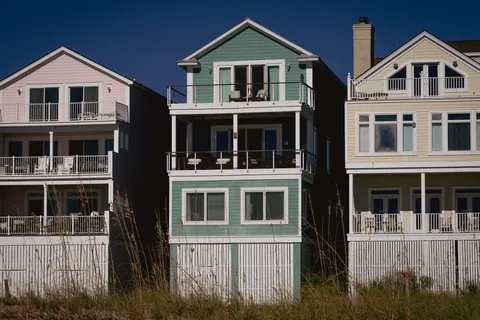
Neighborhoods within 2–3 miles of the Bay waterfront (Jack London Square, Temescal, Emeryville, Alameda island) experience a strongly marine-moderated climate. Summer highs rarely exceed 80°F, with frequent fog intrusion from the Golden Gate corridor. These neighborhoods actually experience more heating need than cooling need: cool fog-season mornings from May through August, mild summers, and cool winters from November through March. A mini split in these locations functions primarily as a heat pump for winter warming, with air conditioning as a secondary benefit for the occasional heat wave.
Sizing for these locations: 9,000–12,000 BTU per zone for most rooms; 12,000–18,000 BTU for open living areas. Heating capacity matters more than cooling capacity here.
Oakland Hills and Piedmont
The hills experience more temperature variation than the flatlands, warmer and drier in summer (highs 85–95°F regularly), cooler and windier in winter. Homes in the Montclair, Piedmont, and Rockridge hills areas need genuine cooling capacity for summer afternoons and heating capacity for winter nights that drop to 35–42°F. Sizing: 12,000–18,000 BTU for standard rooms; 18,000–24,000 BTU for large open living areas with southern or western exposure.
Inland East Bay: Concord, Walnut Creek, Pleasanton
Beyond the Caldecott Tunnel and through the Diablo Valley, the marine influence diminishes rapidly. Concord, Walnut Creek, Pleasant Hill, and Danville experience genuine Central Valley-adjacent climate: summer highs of 95–105°F, virtually no marine fog benefit, and the need for real air conditioning capacity. Sizing here follows Central California standards rather than coastal Bay Area standards, 18,000–24,000 BTU for average living areas, with 24,000–36,000 BTU multi-zone systems for larger homes.
Tri-Valley: Livermore, Pleasanton, Dublin
The Tri-Valley is hot by any California standard. Livermore regularly reaches 105–110°F in July and August, with dry heat that demands full-capacity mini splits sized for these extremes. Pleasanton and Dublin are somewhat moderated but still regularly hit 100°F. Mini split systems here must be sized for peak cooling load, not average conditions, typically 24,000 BTU per large zone. SEER2 efficiency becomes especially valuable in the Tri-Valley because systems run at high capacity for sustained periods through summer.
Key fact: The East Bay spans three distinct ASHRAE climate zones in a remarkably compressed geography. Oakland's waterfront neighborhoods fall in Climate Zone 3C (warm-marine), the inland valleys are Climate Zone 12 (hot-dry), and the transition zone through the hills runs through Climate Zone 3B. This matters for system selection because a unit optimized for Zone 3C's moderate conditions (emphasizing heating efficiency and coastal corrosion resistance) is a different product spec than one optimized for Zone 12's sustained summer heat (emphasizing cooling capacity and SEER2 efficiency). Get the zone right for your neighborhood.
Oakland's Historic Housing Stock: Ductless Is the Solution
Oakland has one of the highest concentrations of pre-war housing in the Bay Area, Craftsman bungalows, Victorian Italianates, Spanish Colonial Revivals, and Tudor cottages built from the 1890s through the 1940s that were never designed for central HVAC. These homes are the primary driver of mini split adoption in Oakland and Piedmont:
Why Traditional Central Systems Fail in Historic Oakland Homes
- Balloon-frame construction has no central chase space for duct runs without major structural intervention
- Plaster-on-lath walls make duct installation extremely invasive and expensive
- Crawl spaces are often too shallow or compromised for underfloor duct installation
- Historic preservation considerations in designated historic districts (much of Piedmont, parts of Rockridge) restrict structural modifications
- The cost of forced-air ductwork in a historic Oakland Craftsman can reach $15,000–$25,000 vs $8,000–$14,000 for a quality multi-zone mini split
Mini Split Installation in Oakland Craftsman and Victorian Homes
Installing mini splits in these historic homes requires thoughtful line set routing to minimize visual impact:
- Interior wall routing: Line sets can often be run inside existing interior partition walls or through attic space with minimal plaster disruption
- Exterior line set covers: Where exterior routing is necessary, aluminum or PVC line set covers painted to match trim are acceptable and nearly invisible from street view
- Mini duct cassette option: For homes where room-by-room wall units are not desirable aesthetically, Mitsubishi's SEZ-KD concealed air handler can be installed above ceilings or in closets to provide ducted air delivery from a single indoor unit, achieving comfort in multiple rooms from one mini split compressor
PG&E Rate Optimization for East Bay Mini Splits
All East Bay residents are served by PG&E, with rate structures that significantly reward time-shifted mini split operation:
PG&E E-TOU-C Rate (Most Common Residential TOU Plan)
- Peak (4–9 PM weekdays): $0.43–$0.56/kWh summer
- Off-peak (all other hours): $0.19–$0.24/kWh
TOU Strategy for East Bay Climate Zones
Coastal/mild zone (Oakland waterfront, Emeryville): Evening fog typically cools these areas naturally by 5–7 PM, so peak-hour avoidance is relatively easy: allow natural cooling to handle the 4–9 PM window, use mini split pre-warming in winter off-peak hours (overnight 11 PM–6 AM).
Inland zones (Concord, Walnut Creek, Tri-Valley): Peak hours (4–9 PM) coincide with the hottest part of the day in these locations. Strategy: pre-cool aggressively from 6 AM–4 PM at off-peak rates, set temperature allowance to drift 4–6°F during peak window (to 79–81°F from a 75°F setpoint), resume normal cooling at 9 PM. This strategy reduces peak-hour consumption by 60–75% while maintaining reasonable comfort through the hottest afternoon hours.
Savings Example: Walnut Creek 3-Bedroom Home
Current system: 10 SEER central AC, 36,000 BTU, running 900 cooling hours per season
- Annual consumption: 3,600W × 900 hrs = 3,240 kWh
- PG&E blended rate at $0.28/kWh avg: $907/season
New system: 3-zone mini split, 22 SEER2, same hours
- Annual consumption: 1,636W × 900 hrs = 1,472 kWh
- PG&E at $0.28/kWh avg: $412/season
- Cooling savings: $495/year
- Heating savings (replacing gas furnace): variable, but typically $300–$500/year depending on gas prices
Pro tip: East Bay residents in many cities qualify for multiple rebate programs that stack effectively. PG&E offers rebates for ENERGY STAR heat pump systems. The Bay Area Air Quality Management District (BAAQMD) has offered incentives for replacing gas heating with heat pump systems. TECH Clean California (California Energy Commission-funded) provides additional rebates for income-qualifying households. Check BayREN.net for the current Bay Area regional energy rebate clearinghouse: programs change frequently, and the right combination of incentives can offset part of a mini split installation cost in the East Bay.
Best Mini Split Models for East Bay Applications
For Coastal/Mild Zone Oakland (Heating Emphasis)
- Mitsubishi MSZ-GL 9,000 or 12,000 BTU: Industry-leading part-load efficiency, excellent heating performance down to 5°F, coastal corrosion protection (Blue Fin) available, best specification for Oakland waterfront and flatlands homes where heating reliability matters more than peak cooling
- Fujitsu Halcyon 12,000 BTU LZAH1: Similar performance profile, excellent reputation in Bay Area installations, strong dealer support in the East Bay
For Inland/Hot Zone (Tri-Valley, Concord, Walnut Creek)
- Daikin 19-Series 24,000 BTU: Outstanding SEER2 efficiency for sustained hot-weather cooling; best value for money in the hot inland zones where summer runtime is highest
- LG Art Cool Gallery 18,000 BTU: Top efficiency, elegant aesthetics suitable for Walnut Creek and Danville luxury homes; LG's ThinQ smart home integration works well for TOU-optimized scheduling
East Bay Building Permits and Utility Incentives
Mini split installations in the East Bay require electrical and mechanical permits in essentially all jurisdictions:
- Oakland: Building permit + mechanical permit required; typical permit cost $250–$450
- Alameda: Mechanical and electrical permits required; Alameda Municipal Power (not PG&E) serves Alameda island. Check AMP's separate rebate programs
- Walnut Creek, Concord, Pleasant Hill: Contra Costa County jurisdiction for unincorporated areas; each city has separate permit offices
- Livermore, Pleasanton, Dublin: City permits required; all PG&E territory
Summary: East Bay Mini Splits Require Zone-Specific Sizing
Oakland and the East Bay's extraordinary climate diversity requires a zone-specific approach to mini split selection. Coastal and low-elevation Oakland neighborhoods need heating-optimized systems with modest cooling capacity and corrosion protection; inland and Tri-Valley communities need full-capacity cooling systems sized for 100°F+ summer peaks. The common thread: all East Bay residents benefit from PG&E TOU rate optimization, available rebate stacking from multiple agencies, and the particular advantage of ductless systems for Oakland's large inventory of pre-war housing that was never designed for central HVAC. A properly sized and installed mini split in the East Bay pays back faster than almost anywhere else in Northern California, given PG&E's high rates and the long cooling season in the inland zones.